
Homeowners often face a dilemma when trying to reduce monthly utility bills and improve indoor comfort. The debate usually centers on two primary solutions: air sealing and insulation. While both are critical components of a high-performance building envelope, they serve distinct functions. Understanding the nuances between these two methods is essential for anyone looking to optimize their living environment and ensure that your heating and cooling systems are not overworking throughout the year.
At Star Energy Consultants, we emphasize that a truly efficient home requires a holistic approach. It is not always about choosing one over the other, but rather understanding how they work in tandem to prevent heat transfer and air leakage. By focusing on both, you create a durable barrier against the elements.
- Reduces total energy consumption.
- Extends the lifespan of HVAC equipment.
- Eliminates uncomfortable temperature swings.
- Provides a more sustainable living environment.
Understanding the Home Thermal Envelope
To grasp the difference between air sealing and insulation, one must first understand the concept of the thermal envelope. This is the physical separator between the conditioned interior of your home and the unconditioned outdoor environment. A strong envelope keeps expensive treated air inside while keeping extreme temperatures out. Without a solid envelope, your home loses energy through walls, floors, and ceilings constantly, leading to financial loss and physical discomfort for all residents.
The Role of Insulation
Insulation acts as a blanket for your home. Its primary job is to resist conductive heat flow. In the winter, it keeps heat from escaping through the ceilings and walls. In the summer, it prevents outdoor heat from radiating into your living spaces. The effectiveness of insulation is measured by its R-value; the higher the R-value, the greater the thermal resistance. High-quality insulation materials also provide a significant buffer against exterior noise, making your indoor space much quieter and more peaceful.
- Fiberglass: Common and cost-effective batts.
- Cellulose: Blown-in material made from recycled paper.
- Mineral Wool: High fire resistance and soundproofing.
- Spray Foam: Offers both thermal resistance and air sealing.
The Role of Air Sealing
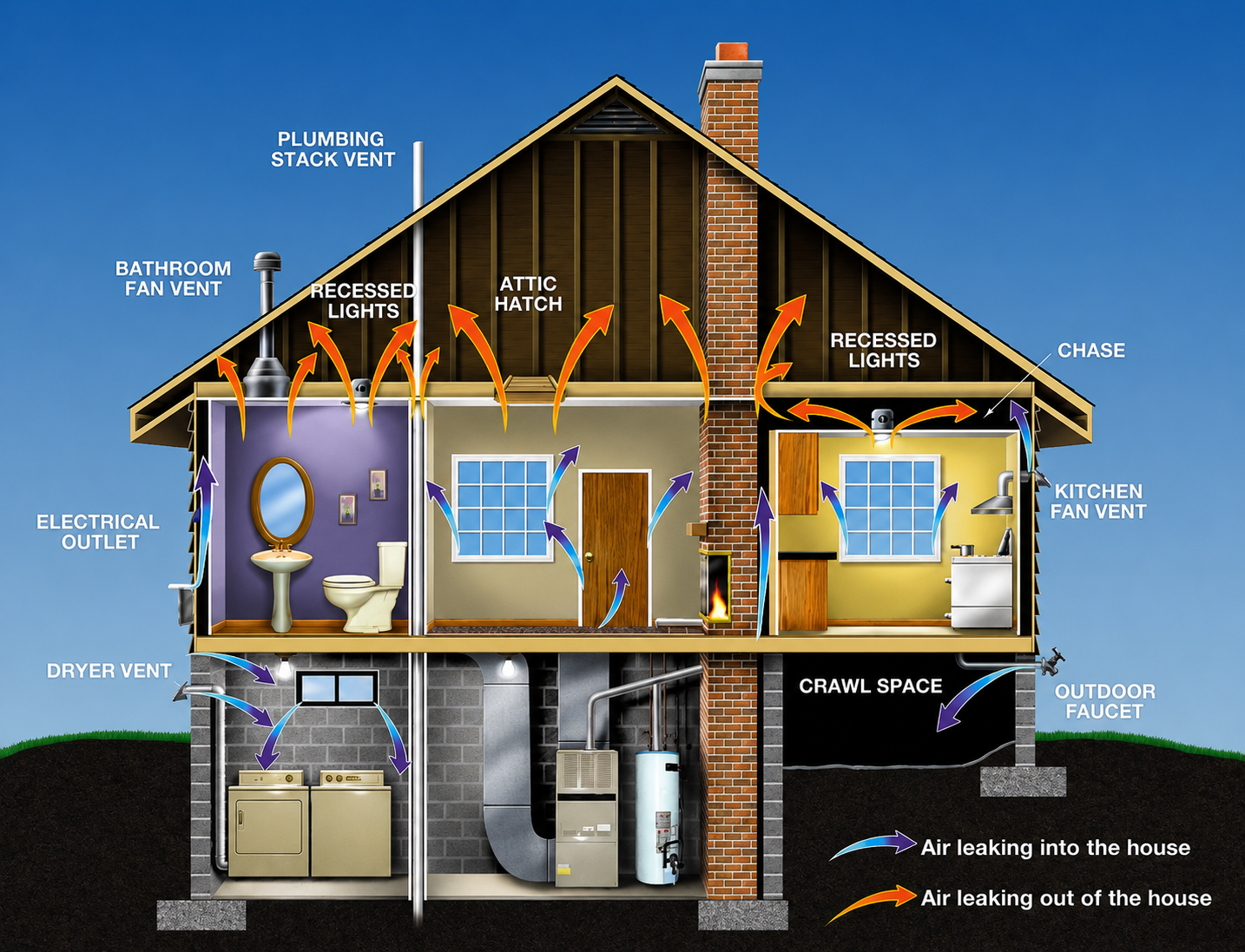
Air sealing is the process of plugging holes, gaps, and cracks that allow air to move involuntarily in and out of the structure. Unlike insulation, which manages heat transfer, air sealing manages air movement. Even the thickest insulation cannot perform effectively if air is whistling through it. Common leak points include attic hatches, recessed lighting, plumbing stacks, and electrical outlets. When these gaps are ignored, your home experiences “bypass” leaks that render your insulation far less effective than its rated R-value suggests.
- Caulking around window frames and door trim.
- Using weatherstripping on movable joints.
- Expanding foam for larger gaps in the attic or basement.
- Installing gaskets behind electrical outlet faceplates.
Why Air Sealing Must Come First
In the hierarchy of home improvements, air sealing is often considered the foundational step. This is because air movement carries moisture and heat. If a home has significant leaks, the insulation will essentially act as a giant filter rather than a thermal barrier. For those experiencing extreme temperature fluctuations, an energy audit for hot rooms can identify exactly where these leaks are occurring. By sealing first, you protect the new insulation from moisture-laden air that can cause mold or degradation over time.
- Prevents moisture from condensing inside walls.
- Stops the “wind-washing” effect in fiberglass.
- Identifies structural gaps before they are covered.
- Ensures a cleaner environment by blocking dust.
The Stack Effect
One of the most significant reasons air sealing is vital is the stack effect. In the winter, warm air rises and escapes through leaks in the attic. This creates a vacuum in the lower levels of the home, pulling cold air in through gaps in the basement or crawlspace. Air sealing neutralizes this pressure imbalance, allowing your HVAC system to work more efficiently. This cycle of air loss and intake forces your furnace to run almost continuously during the coldest months of the year.
- High pressure at the top of the house.
- Low pressure at the bottom of the house.
- Convective loops that waste energy.
- Increased infiltration of outdoor allergens.
Comparing Air Sealing and Insulation
To better understand how these two strategies differ, consider the following comparison table which highlights the distinct roles each plays in maintaining a comfortable and cost-effective home environment:
| Feature | Air Sealing | Insulation |
| Primary Function | Blocks air leakage and drafts | Resists conductive heat transfer |
| Common Materials | Caulk, spray foam, weatherstripping | Fiberglass, cellulose, mineral wool |
| Target Areas | Cracks, gaps, joints, penetrations | Walls, attics, floors, crawlspaces |
| Key Metric | ACH (Air Changes per Hour) | R-Value (Thermal Resistance) |
| Moisture Control | Prevents humid air from entering | Reduces condensation on surfaces |
Signs Your Home Needs Better Thermal Protection
It is not always obvious which service your home requires. However, certain symptoms indicate a failure in the thermal envelope. If you notice any of the following, it might be time to explore our services to determine the best path forward. Ignoring these signs often leads to higher maintenance costs for your cooling and heating systems as they struggle to keep up with the constant loss of conditioned air through the building’s shell.
- Uneven Temperatures: If one room is freezing while another is sweltering, your insulation may be uneven or air bypasses may be present.
- Drafts Near Outlets: Feeling a breeze near electrical outlets or baseboards is a surefire sign that air sealing is needed.
- High Utility Bills: If your energy costs are rising without a change in usage habits, your home is likely losing conditioned air.
- Ice Dams: In winter, ice dams on the roof indicate that warm air is escaping into the attic, melting snow that then refreezes at the eaves.
- Pest Intrusions: Gaps large enough for air are often large enough for insects or small rodents to enter.
The Synergy of a Combined Approach
While air sealing stops the wind, insulation stops the heat. To achieve maximum energy efficiency, Star Energy Consultants recommends a combined strategy. When you seal the gaps before adding insulation, you ensure that the insulating material stays dry and effective. A home that is only insulated but not sealed will still feel drafty, while a home that is only sealed but not insulated will still feel cold due to radiant heat loss through the surfaces.
For residents dealing with specific seasonal issues, such as frigid winters, specialized cold room energy audits can reveal if the issue stems from poor R-value or excessive infiltration.
- Maximum comfort in every season.
- Optimized return on investment (ROI).
- Better control over indoor humidity levels.
- Enhanced structural integrity of the home.
Improving Indoor Air Quality
Efficiency is not the only benefit of a well-sealed and insulated home. By controlling air movement, you also control the entry of outdoor pollutants, allergens, and humidity. This leads to a healthier indoor environment for your family. Properly installed insulation also provides sound dampening, making your home quieter and more serene. Without these measures, your home acts as a vacuum for pollen, dust, and vehicle exhaust from the outside world.
- Reduces triggers for asthma and allergies.
- Keeps out unwanted outdoor odors.
- Prevents the growth of mold by controlling moisture.
- Creates a quieter sleeping environment.
How to Get Started with Professional Assessment
Beginning a home improvement journey can feel overwhelming. The best first step is always data collection. A professional home energy audit provides a roadmap for your specific needs. Using tools like blower door tests and infrared cameras, professionals can see the invisible forces affecting your comfort. These diagnostic tools remove the guesswork, ensuring that every dollar you spend on upgrades goes toward the most impactful improvements for your specific floor plan.
If you are ready to take control of your home environment, you can get more information about how a comprehensive evaluation can save you money and improve your quality of life.
- Infrared thermography to find hidden gaps.
- Blower door testing to measure total leakage.
- Combustion safety testing for appliances.
- Prioritized list of recommended repairs.
Maintenance and Longevity
Both air sealing and insulation are long-term investments. Most insulation materials last for decades, though they can settle or be damaged by pests or moisture over time. Air sealing materials like high-quality caulk and expandable foam are also durable but should be inspected periodically, especially around windows and doors that see frequent use. Maintaining these barriers ensures that the energy efficiency gains you achieve today will continue to provide benefits for many years into the future.
Working with a reputable company like Star Energy Consultants ensures that the materials used are compatible with your home’s structure and that the installation meets modern building standards.
- Check attic insulation levels every few years.
- Inspect door sweeps for wear and tears.
- Look for new cracks in the foundation or siding.
- Ensure attic vents remain unobstructed.
Conclusion
When asking whether air sealing or insulation matters more, the answer is that they are two halves of a whole. Air sealing provides the structure and protection needed for insulation to do its job effectively. Without sealing, insulation loses its primary effectiveness. Without insulation, a sealed home will still lose heat through conduction and radiation. Addressing both together is the only way to achieve a truly high-performance home that remains comfortable regardless of the weather outside.
By addressing both, you create a seamless barrier that protects your home from the elements. This leads to lower energy consumption, increased comfort, and a smaller environmental footprint. For personalized guidance on your home’s needs and to start your journey toward a more efficient lifestyle, visit our homepage to connect with a local expert today.
Frequently Asked Questions
1. Can I add insulation without air sealing first?
While you can add insulation, it is highly discouraged. Without air sealing, conditioned air will continue to leak through the insulation, significantly reducing its R-value and potentially leading to moisture buildup. This can cause the material to sag and lose its effectiveness much faster than a sealed installation would.
2. Which is more effective for stopping drafts?
Air sealing is specifically designed to stop drafts. While high-density insulation can slow air movement slightly, it is not an airtight barrier. Sealing cracks and gaps is the only way to eliminate drafts entirely and ensure that you don’t feel “cold spots” when sitting near exterior walls or windows.
3. Does air sealing make a house too tight?
A house can be sealed tightly, but professional auditors ensure that there is still adequate ventilation for indoor air quality. If a home becomes exceptionally tight, mechanical ventilation systems can be introduced to ensure fresh air exchange. The goal is to “seal tight and ventilate right” to balance health and efficiency.
4. How do I know if my insulation is sufficient?
Checking the depth of your attic insulation is a quick way to gauge its adequacy. If you can see the floor joists, you likely need more. However, a professional audit is the most accurate way to measure thermal performance because it looks at the whole house, including wall cavities and crawlspaces that are hard to see.
5. Is air sealing a one-time project?
Generally, yes. Major air sealing in the attic and crawlspace is a “set it and forget it” improvement. Surface-level sealing around doors and windows may require occasional touch-ups as the house settles or materials age, but the foundational work remains effective for the life of the home.